Sharots
 Sharots from Garni | |
| Alternative names | Sujukh Kaghtsr sujukh Sweet sharots Sweet sujukh Armenian snickers[1] |
|---|---|
| Type | Confectionery |
| Place of origin | Armenia |
| Associated cuisine | Armenian cuisine |
| Main ingredients | grape must (mostly), flour, walnuts, cinnamon, cloves, cardamom |
| |

Sharots (Armenian: շարոց, Armenian pronunciation: [ʃɑˈɾɔt͡sʰ]), also known as kaghtsr sujukh (Armenian: քաղցր սուջուխ, lit. 'sweet sujukh') is a traditional Armenian confection made from halved walnut kernels threaded onto a string and coated with a spiced grape-based mixture.[2][3][4][5][6] Sharots has its own specific method of preparation that includes the use of a blend of cinnamon, clove, and cardamom, which contributes to its distinctive flavor and aroma that differentiates it from similar confections.[7][8][9][10]
The tradition of preparing sweet sharots in the Ashtarak region is included in the intangible cultural heritage list of Armenia.[11]
Preparation
[edit | edit source]Freshly pressed grape must is strained through cheesecloth and treated with a special type of clay—bentonite, primarily sourced from Ashtarak and referred to as "doshab clay"—to neutralize its acidity (doshab is a traditional Armenian syrup).[7][12] The clay is first dried over a fire, cooled, sieved, and then added to the must in a ratio of 1 kilogram per 20 liters.[12] The mixture is stirred thoroughly and left to stand for 24 hours: during the first 18 hours, it is stirred every 2 hours, and then left undisturbed for the remaining 6 hours to allow the clay to settle and the must to become clear.[12]
After settling, the clay is removed, the sediment is filtered and returned to the must, which is then simmered over heat until its volume is reduced by half.[12] Flour, previously mixed with water and strained through a sieve, is gradually added to the thickened must.[12] The mixture is cooked further until it reaches a jelly-like consistency.[12] Ten minutes before completion, a ground mixture of cinnamon, clove, and cardamom is added.[12]
Halved walnut kernels are threaded onto strings approximately 80 centimeters long and dried for several days.[12] The dried walnut strands are dipped into the hot jelly-like mixture, then hung on a line with containers placed underneath to collect the dripping liquid.[12] After 30 minutes, the dipping process is repeated.[12] The strands are then transferred to a shaded area to dry for 10–12 days.[12]
The finished sharots is cut into pieces about 20 centimeters in length and sprinkled with a mixture of millet flour, cinnamon, clove, and cardamom.[12]
Gallery
[edit | edit source]-
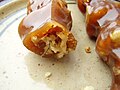 Undyed sharots
 -
 Armenian dried fruit, fruit leather, and kaghtsr sujukh from Geghard
 -
 Sharots and other dried fruit products at a market in Yerevan
 -

-
 Sharots made with pomegranate must

.jpg)
.jpg)


See also
[edit | edit source]References
[edit | edit source]- ^ Lua error in Module:Citation/CS1/Configuration at line 2172: attempt to index field '?' (a nil value).
- ^ Lua error in Module:Citation/CS1/Configuration at line 2172: attempt to index field '?' (a nil value).
Суджух (шароц) сделан из нанизанных на нитку половинок ядер грецкого ореха, которые обмакивают в виноградный дошаб, высушивают и затем посыпают мукой из пшата, корицей, толченой гвоздикой и кардамоном.
Sujukh (sharots) is made from halves of walnut kernels strung on a thread, which are dipped in grape doshab, dried, and then sprinkled with millet flour, cinnamon, crushed cloves, and cardamom. - ^ Lua error in Module:Citation/CS1/Configuration at line 2172: attempt to index field '?' (a nil value).
Ընկույզի կիսած միջուկների շարանի վրա դոնդողակերպ շիրայի շերտ գոյացնելով ու չորացնելով պատրաստվող քաղցրավենիք, սուջուխ:
Sharots, a confection prepared by forming a thick layer of grape syrup over a string of halved walnut kernels and drying it (sujukh). - ^ Lua error in Module:Citation/CS1/Configuration at line 2172: attempt to index field '?' (a nil value).
- ^ Lua error in Module:Citation/CS1/Configuration at line 2172: attempt to index field '?' (a nil value).
- ^ Lua error in Module:Citation/CS1/Configuration at line 2172: attempt to index field '?' (a nil value).
- ^ a b Lua error in Module:Citation/CS1/Configuration at line 2172: attempt to index field '?' (a nil value).
ШАРОЦ. Армянское лакомство, напоминающее по технологии приготовления грузинскую чурчхелу (см.). Имеет свои особенности приготовления, которые влияют на его вкус. Виноградное сусло обрабатывают бентонитом, процеживают, используют смесь трех пряностей (корицы, гвоздики, кардамона), совершенно не применяемых в чурчхеле, обладающих естественным вкусом и ароматом.
Sharots. An Armenian confection that resembles the Georgian churchkhela in its method of preparation. However, it has distinct preparation features that affect its flavor. The grape must is treated with bentonite, filtered, and flavored with a mixture of three spices—cinnamon, clove, and cardamom—which are not used in churchkhela and contribute a unique taste and aroma. - ^ Lua error in Module:Citation/CS1/Configuration at line 2172: attempt to index field '?' (a nil value).
- ^ Lua error in Module:Citation/CS1/Configuration at line 2172: attempt to index field '?' (a nil value).
- ^ Lua error in Module:Citation/CS1/Configuration at line 2172: attempt to index field '?' (a nil value).
- ^ Lua error in Module:Citation/CS1/Configuration at line 2172: attempt to index field '?' (a nil value).
- ^ a b c d e f g h i j k l Lua error in Module:Citation/CS1/Configuration at line 2172: attempt to index field '?' (a nil value).
External links
[edit | edit source]- Error creating thumbnail: File missing Media related to Lua error in Module:Commons_link at line 62: attempt to index field 'wikibase' (a nil value). at Wikimedia Commons
