Radical 157
Jump to navigation
Jump to search
| 足 | |
|---|---|
Radical 157 (U+2F9C)
| |
| 足 (U+8DB3) "foot" | |
| Pronunciations | |
| Pinyin: | zú |
| Bopomofo: | ㄗㄨˊ |
| Wade–Giles: | tsu2 |
| Cantonese Yale: | juk1 |
| Jyutping: | zuk1, zeoi3 |
| Japanese Kana: | ショク shoku / ソク soku (on'yomi) あし ashi / たる taru (kun'yomi) |
| Sino-Korean: | 족 jok |
| Hán-Việt: | túc |
| Names | |
| Chinese name(s): | (Left) 足字旁 zúzìpáng (Bottom) 足字底 zúzìdǐ |
| Japanese name(s): | 足/あし ashi (Left) 足偏/あしへん ashihen |
| Hangul: | 발 bal |
| Stroke order animation | |
 | |
Radical 157 or radical foot (足部) meaning "foot" is one of the 20 Kangxi radicals (214 radicals in total) composed of 7 strokes.
In the Kangxi Dictionary, there are 580 characters (out of 49,030) to be found under this radical.
足 is also the 158th indexing component in the Table of Indexing Chinese Character Components predominantly adopted by Simplified Chinese dictionaries published in mainland China.
Evolution
[edit | edit source]-
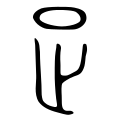 Bronze script character
 -
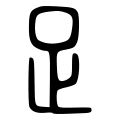 Small seal script character


Derived characters
[edit | edit source]| Strokes | Characters |
|---|---|
| +0 | 足 |
| +2 | 趴 |
| +3 | 趵 趶 趷 趸SC (=躉) |
| +4 | 趹 趺 趻 趽 趾 趿 跀 跁 跂 跃SC (=躍) 跄SC (=蹌) |
| +5 | 跅 跆 跇 跈 跉 跊 跋 跌 跍 跎 跏 跐 跑 跒 跓 跔 跕 跖 跗 跘 跙 跚 跛 跜 距 跞SC (=躒) 践SC (=踐) |
| +6 | 践JP (=踐) 趼 跟 跠 跡 跢 跣 跤 跥 (=跺) 跦 跧 跨 跩 跪 跫 跬 跭 跮 路 跰 跱 跲 跳 跴 跶SC (=躂) 跷SC (=蹺) 跸SC (=蹕) 跹SC (=躚) 跺 跻SC (=躋) |
| +7 | 跼 跽 跾 跿 踀 踁 (=脛 -> 肉) 踂 踃 踄 踅 踆 踇 踈JP (=疏 -> 疋) 踉 踊SC (=踴) 踋 踌SC (=躊) 踍 踎 |
| +8 | 踏 踐 踑 踒 踓 踔 踕 踖 踗 踘 (=鞠 -> 革) 踙 踚 踛 踜 踝 踞 踟 踠 踡 踢 踣 踤 踥 踦 踧 踨 踩 踪SC/JP (=蹤) 踬SC (=躓) 踭 踮 踯SC (=躑) 踺 |
| +9 | 踫 (=碰 -> 石) 踰 (=逾 -> 辵 / 窬 -> 穴) 踱 踲 踳 踴 踵 踶 踷 踸 踹 踻 踼 踽 踾 踿 蹀 蹁 蹂 蹃 蹄 蹅 |
| +10 | 蹆 蹇 蹈 蹉 蹊 蹋 蹌 蹍 蹎 蹏 (=蹄) 蹐 蹑SC (=躡) 蹒SC (=蹣) 蹓 |
| +11 | 蹔 (=暫 -> 日) 蹕 蹖 蹗 蹘 蹙 蹚 蹛 蹜 蹝 蹞 (=跬) 蹟 (=跡) 蹠 (=跖) 蹡 蹢 蹣 蹤 蹥 蹦 蹧 (=糟 -> 米) 蹮 躀 |
| +12 | 蹨 蹩 蹪 蹫 蹬 蹭 蹯 蹰SC (=躕) 蹱 蹲 蹳 蹴 蹵 (=蹴) 蹶 蹷 蹸 蹹 蹺 蹻 蹼 蹽 蹾 蹿SC (=躥) |
| +13 | 躁 躂 躃 躄 躅 躆 躇 躈 躉 |
| +14 | 躊 躋 躌 (=䟼) 躍 躎 躏SC (=躪) |
| +15 | 躐 躑 躒 躓 躔 躕 躖 |
| +16 | 躗 躘 躙 躚 躛 躜SC (=躦) |
| +17 | 躝 躞 躟 躠 |
| +18 | 躡 躢 躣 躤 躥 |
| +19 | 躦 躧 |
| +20 | 躩 躪 |
| +21 | 躨 |
Sinogram
[edit | edit source]The radical is also used as an independent Chinese character. It is one of the Kyōiku kanji or Kanji taught in elementary school in Japan.[1] It is a first grade kanji.[1]
References
[edit | edit source]Literature
[edit | edit source]- Lua error in Module:Citation/CS1/Configuration at line 2172: attempt to index field '?' (a nil value).
External links
[edit | edit source]Wikimedia Commons has media related to Radical 157.
Simplified Chinese characters radicals (indexing components) | |
|---|---|
| 1 stroke | |
| 2 strokes | |
| 3 strokes | |
| 4 strokes | |
| 5 strokes | |
| 6 strokes | |
| 7 strokes | |
| 8 strokes | |
| 9 strokes | |
| 10 strokes | |
| 11 strokes | |
| 12 strokes | |
| 13 strokes | |
| 14 strokes |
|
| 17 strokes |
|
GF 0011-2009 Table of Indexing Chinese Character Components prescribes 201 principle indexing components and 100 associated indexing components (in brackets) used in Simplified Chinese. Not all associated indexing components are listed above. | |


