Umm Safa
Umm Safa | |
|---|---|
| Arabic transcription(s) | |
| • Arabic | أم صفا |
| • Latin | Kafr Ishwa (unofficial) |
| Umm Safa from the west Umm Safa from the west | |
| Lua error in Module:Location_map at line 411: Malformed coordinates value. | |
| Coordinates: Lua error in Module:Coordinates at line 489: attempt to index field 'wikibase' (a nil value). | |
| Palestine grid | 165/157 |
| State | State of Palestine |
| Governorate | Ramallah and al-Bireh |
| Government | |
| • Type | Village council |
| Elevation | 647 m (2,123 ft) |
| Population (2017)[2] | |
• Total | 681 |
| Name meaning | "the mother of flat ground"[3] |

Umm Safa/Kafr Ishwa (Arabic: أم صفا) or Um Al-Safa is a Palestinian village in the Ramallah and al-Bireh Governorate.
Location
[edit | edit source]Umm Safa is located 12.1 kilometers (7.5 mi) north of Ramallah. It is bordered by 'Ajjul and 'Atara to the east, Deir as Sudan and Ajjul to the north, Nabi Salih and Deir Nidham to the west, and Jibiya, Burham and Kobar to the south.[1]
Important Bird Area
[edit | edit source]A largely forested 3,500 ha site in the vicinity of the villages of Umm Safa and Nabi Salih has been recognised as an Important Bird Area (IBA) by BirdLife International because it supports a population of lesser spotted eagles.[4]
History
[edit | edit source]It has been suggested that the village was "apparently connected with an ancient Mizpeh,"[5][6] although this has not been borne out by modern archaeology.[7]

Ceramic remains from the Byzantine era have been found here,[8] as have sherds from the Crusader/Ayyubid and Mamluk eras.[7]
Ottoman era
[edit | edit source]Pottery sherds from the early Ottoman era have been found here,[7] and a village by the name of "Kfar Shu" appears in 17th century tax records.[9]
In 1838 Um Safah was noted as a Muslim village in the Beni Zaid district.[10]
In 1870, Victor Guérin climbed up on the hilltop which Umm Safa occupied, and found that the village had about 300 inhabitants. He further noted that: "It must go back to an ancient site as is shown by the materials used in the building of some houses and several columnar sections scattered about the ground. A copious spring, called Ain Umm Safa, provides the villagers with water. They venerate, under a koubbeh, the remains of Nabi Hanan."[11] An official Ottoman village list from about the same year, 1870, listed Kefr Eschwa as having 24 houses and a population of 120, though the population count included men, only. It was noted as being located north of Dschibija.[12][13]
In 1882 the PEF's Survey of Western Palestine (SWP) described Umm Suffah (also called Kefr Ishwah) as "a village on high ground on the Roman road to Antipatris. It contains a small mosque or Moslem chapel, and has a well to the north."[5]
Tomb of Nabi Hanun
[edit | edit source]Located within the village is the mosque of a-Nabi Hanun, which includes an unmarked grave said to belong to a local Muslim saint of the same name. The mosque was built in 1986 following the destruction of the previous tomb housing the remains. Local tradition says that Nabi Hanun and Nabi Sair, whose grave was in the western part of the village, were both sons of Yaqub (Jacob).[14]
British Mandate era
[edit | edit source]In the 1922 census of Palestine, conducted by the British Mandate authorities, Umm Sufa had a population of 80 Muslims,[15] increasing in the 1931 census to 89 Muslims, in 27 houses in Umm Safah (or Kafr Ishwa).[16]
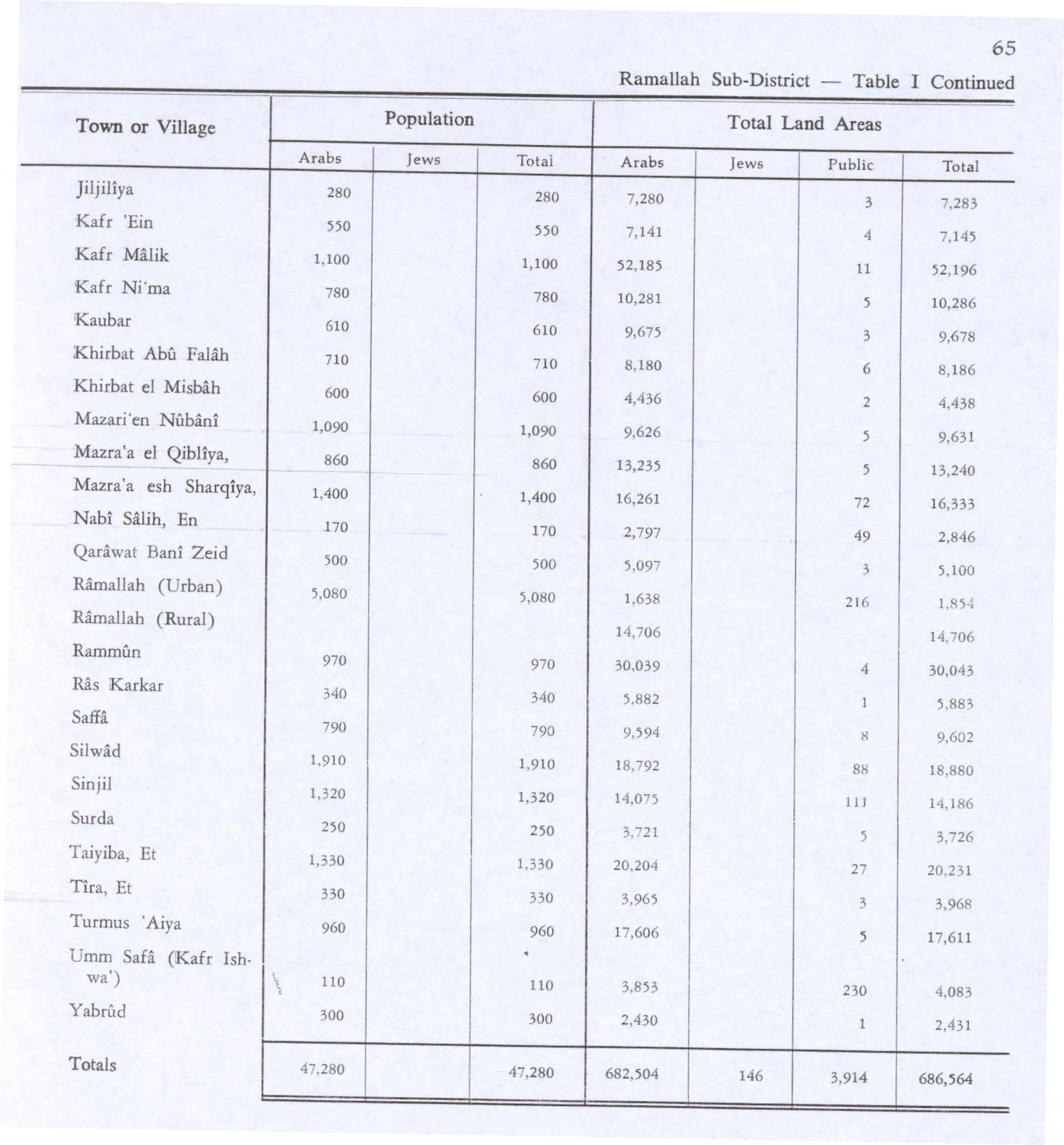
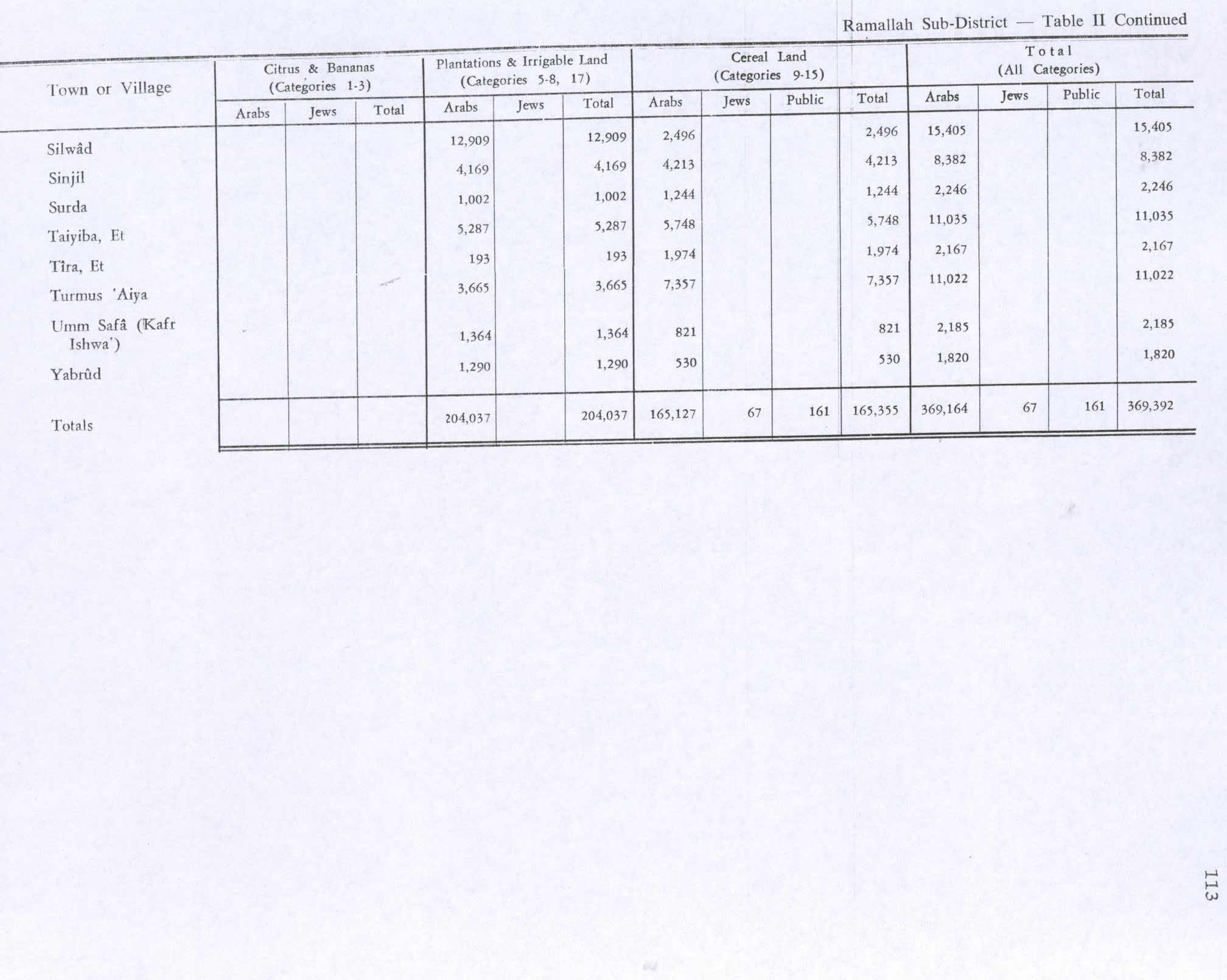
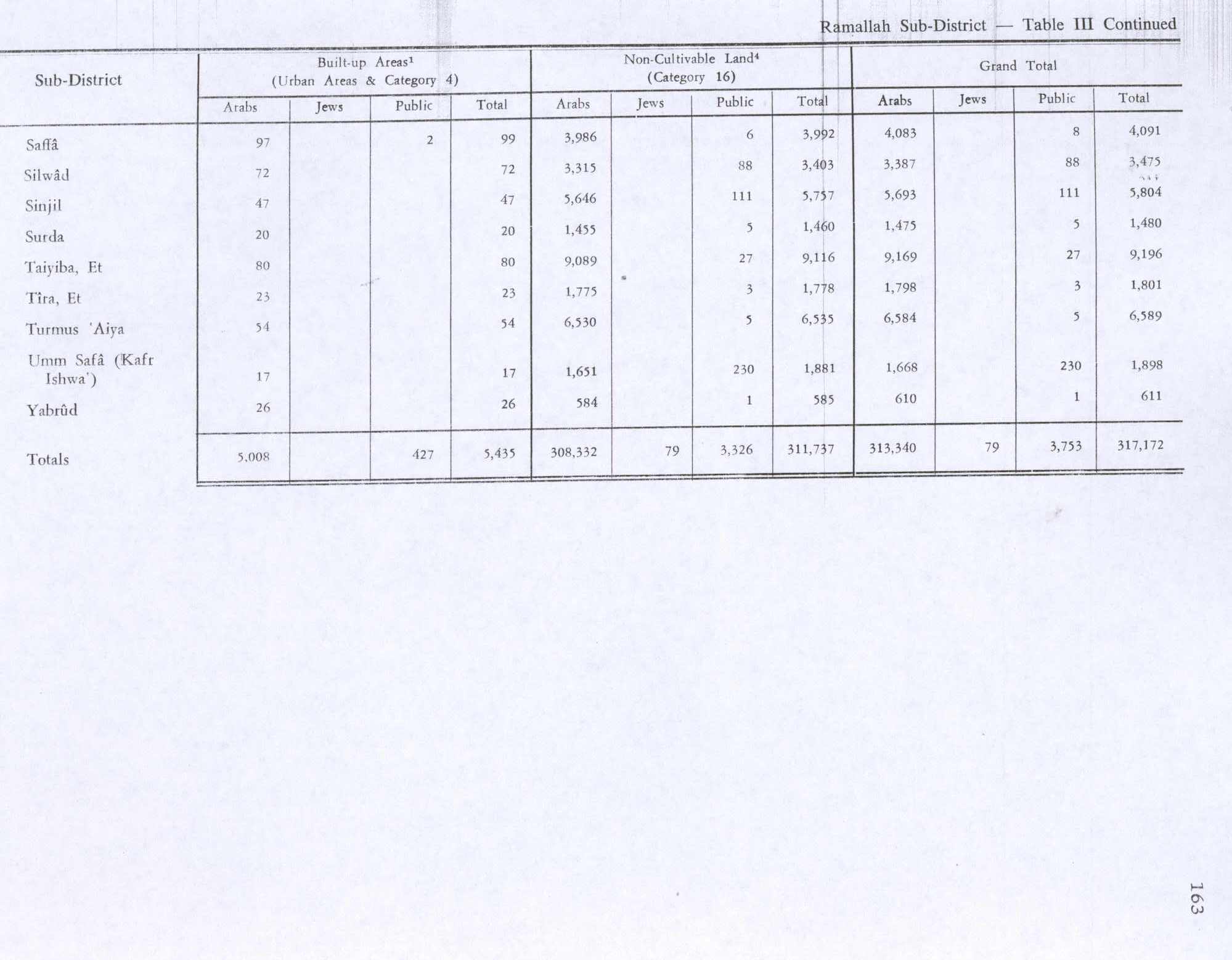
In the 1945 statistics, the population of Umm Safa (Kafr Ishwa) was 110 Muslims,[17] while the total land area was 4,083 dunams, according to an official land and population survey.[18] Of this, 1,364 dunums were used for plantations and irrigable land, 821 for cereals,[19] while 17 dunams were classified as built-up areas.[20]
Jordanian era
[edit | edit source]In the wake of the 1948 Arab–Israeli War, and after the 1949 Armistice Agreements, Umm Safa came under Jordanian rule.
The Jordanian census of 1961 found 252 inhabitants in Umm Safa.[21]
1967-present
[edit | edit source]Since the Six-Day War in 1967, Umm Safa has been under Israeli occupation.
After the 1995 accords, 16% of village land has been defined as Area B land, while the remaining 84% is Area C. Israel has confiscated a total of 227 dunams of land from the village in order to construct two Israeli settlements: Ateret and Hallamish.[22]

In June 2023, the village was attacked by dozens of settlers who burned houses and vehicles [23]
The village has two tombs within it.[24]
References
[edit | edit source]- ^ a b Umm Safa Village Profile, ARIJ, p. 4
- ^ Lua error in Module:Citation/CS1/Configuration at line 2172: attempt to index field '?' (a nil value).
- ^ Palmer, 1881, p. 246
- ^ Lua error in Module:Citation/CS1/Configuration at line 2172: attempt to index field '?' (a nil value).
- ^ a b Conder and Kitchener, 1882, SWP II, p. 291
- ^ Conder and Kitchener, 1883, SWP II, p. 378
- ^ a b c Finkelstein et al, 1997, p. 401
- ^ Dauphin, 1998, p. 826
- ^ Toledano, 1984, p. 295, has it at location 35°09′30″E 32°00′30″N
- ^ Robinson and Smith, 1841, vol. 3, 2nd Appendix, p. 125
- ^ Guérin, 1875, p. 109
- ^ Socin, 1879, p. 156 It was also noted as part of the Beni Zeid district
- ^ Hartmann, 1883, p. 106 also noted 24 houses
- ^ Lua error in Module:Citation/CS1/Configuration at line 2172: attempt to index field '?' (a nil value).
- ^ Barron, 1923, Table VII, Sub-district of Ramallah, p. 17
- ^ Mills, 1932, p. 51.
- ^ Government of Palestine, Department of Statistics, 1945, p. 26
- ^ Government of Palestine, Department of Statistics. Village Statistics, April, 1945. Quoted in Hadawi, 1970, p. 65
- ^ Government of Palestine, Department of Statistics. Village Statistics, April, 1945. Quoted in Hadawi, 1970, p. 113
- ^ Government of Palestine, Department of Statistics. Village Statistics, April, 1945. Quoted in Hadawi, 1970, p. 163
- ^ Government of Jordan, Department of Statistics, 1964, p. 24
- ^ Umm Safa Village Profile, ARIJ, p. 16
- ^ Lua error in Module:Citation/CS1/Configuration at line 2172: attempt to index field '?' (a nil value).
- ^ Frantzman and Bar, 2013, p. 102

Bibliography
[edit | edit source]- Lua error in Module:Citation/CS1/Configuration at line 2172: attempt to index field '?' (a nil value).
- Lua error in Module:Citation/CS1/Configuration at line 2172: attempt to index field '?' (a nil value).
- Lua error in Module:Citation/CS1/Configuration at line 2172: attempt to index field '?' (a nil value).
- Lua error in Module:Citation/CS1/Configuration at line 2172: attempt to index field '?' (a nil value).
- Lua error in Module:Citation/CS1/Configuration at line 2172: attempt to index field '?' (a nil value).
- Lua error in Module:Citation/CS1/Configuration at line 2172: attempt to index field '?' (a nil value).
- Lua error in Module:Citation/CS1/Configuration at line 2172: attempt to index field '?' (a nil value).
- Lua error in Module:Citation/CS1/Configuration at line 2172: attempt to index field '?' (a nil value). (Kefr Achoua (p. 39) ..mentioned in Socin)
- Lua error in Module:Citation/CS1/Configuration at line 2172: attempt to index field '?' (a nil value).
- Lua error in Module:Citation/CS1/Configuration at line 2172: attempt to index field '?' (a nil value).
- Lua error in Module:Citation/CS1/Configuration at line 2172: attempt to index field '?' (a nil value).
- Lua error in Module:Citation/CS1/Configuration at line 2172: attempt to index field '?' (a nil value).
- Lua error in Module:Citation/CS1/Configuration at line 2172: attempt to index field '?' (a nil value).
- Lua error in Module:Citation/CS1/Configuration at line 2172: attempt to index field '?' (a nil value).
- Lua error in Module:Citation/CS1/Configuration at line 2172: attempt to index field '?' (a nil value).
- Lua error in Module:Citation/CS1/Configuration at line 2172: attempt to index field '?' (a nil value).
External links
[edit | edit source]- Welcome To Umm Safa
- Umm Safa Welcome to Palestine
- Survey of Western Palestine, Map 14: IAA, Wikimedia commons
- Umm Safa Village (Fact Sheet), Applied Research Institute–Jerusalem (ARIJ)
- Umm Safa Village Profile, ARIJ
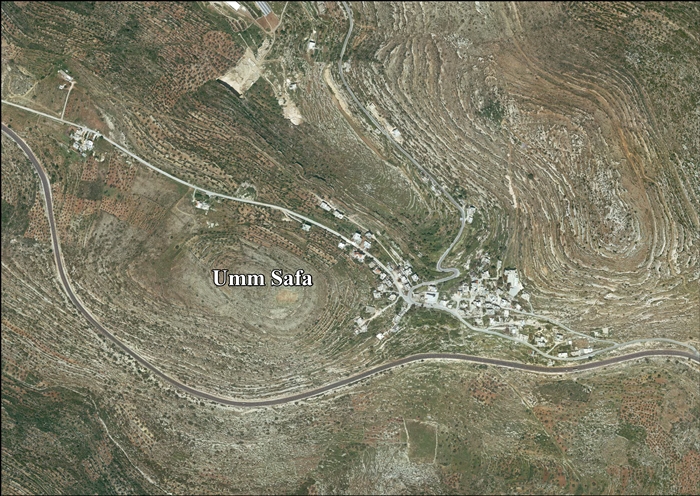
- Umm Safa Aerial photo, ARIJ
- Locality Development Priorities and Needs in Umm Safa Village, ARIJ


Lua error in Module:Authority_control at line 153: attempt to index field 'wikibase' (a nil value).