Middle Triassic
This article needs additional citations for verification. (February 2024) |
| Middle Triassic | |||||||||||||||||||||||
|---|---|---|---|---|---|---|---|---|---|---|---|---|---|---|---|---|---|---|---|---|---|---|---|
| File:Mollweide Paleographic Map of Earth, 240 Ma (Ladinian Age).png A map of Earth as it appeared 240 million years ago during the Middle Triassic Epoch, Ladinian Age | |||||||||||||||||||||||
| File:Obere Schaumkalkbank am Altenberg bei Dörzbach 280308.jpg | |||||||||||||||||||||||
| Chronology | |||||||||||||||||||||||
| |||||||||||||||||||||||
| Etymology | |||||||||||||||||||||||
| Name formality | Formal | ||||||||||||||||||||||
| Usage information | |||||||||||||||||||||||
| Celestial body | Earth | ||||||||||||||||||||||
| Regional usage | Global (ICS) | ||||||||||||||||||||||
| Time scale(s) used | ICS Time Scale | ||||||||||||||||||||||
| Definition | |||||||||||||||||||||||
| Chronological unit | Epoch | ||||||||||||||||||||||
| Stratigraphic unit | Series | ||||||||||||||||||||||
| Time span formality | Formal | ||||||||||||||||||||||
| Lower boundary definition | Not formally defined | ||||||||||||||||||||||
| Lower boundary definition candidates |
| ||||||||||||||||||||||
| Lower boundary GSSP candidate section(s) | |||||||||||||||||||||||
| Upper boundary definition | FAD of the Ammonite Daxatina canadensis | ||||||||||||||||||||||
| Upper boundary GSSP | Prati di Stuores, Dolomites, Italy Lua error: callParserFunction: function "#coordinates" was not found. | ||||||||||||||||||||||
| Upper GSSP ratified | 2008[6] | ||||||||||||||||||||||
In the geologic timescale, the Middle Triassic is the second of three epochs of the Triassic period or the middle of three series in which the Triassic system is divided in chronostratigraphy. The Middle Triassic spans the time between 246.7 Ma and 237 Ma (million years ago). It is preceded by the Early Triassic Epoch and followed by the Late Triassic Epoch. The Middle Triassic is divided into the Anisian and Ladinian ages or stages.[7]
Formerly the middle series in the Triassic was also known as Muschelkalk. This name is now only used for a specific unit of rock strata with approximately Middle Triassic age, found in western Europe.[citation needed] The Ashfield Shale and Bringelly Shale of western Sydney date to this epoch, with the former featuring fluvial fossils from that era.[8][9]
Middle Triassic life
[edit | edit source]Following the Permian–Triassic extinction event, the most devastating of all mass-extinctions, life recovered slowly. In the Middle Triassic, many groups of organisms reached higher diversity again, such as the marine reptiles (e.g. ichthyosaurs, sauropterygians, thallatosaurs), ray-finned fish and many invertebrate groups like molluscs (ammonoids, bivalves, gastropods).[citation needed]
During the Middle Triassic, there were not yet any flowering plants, but instead there were seed ferns and gymnosperms. Small dinosauriforms began to appear, like Nyasasaurus and the ichnogenus Iranosauripus.[citation needed]
-
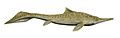 Mixosaurus cornalianus restoration, a Middle Triassic ichthyosaur


.png)

References
[edit | edit source]- ^ Lua error in Module:Citation/CS1/Configuration at line 2172: attempt to index field '?' (a nil value).
- ^ Lua error in Module:Citation/CS1/Configuration at line 2172: attempt to index field '?' (a nil value).
- ^ Lua error in Module:Citation/CS1/Configuration at line 2172: attempt to index field '?' (a nil value).
- ^ Lua error in Module:Citation/CS1/Configuration at line 2172: attempt to index field '?' (a nil value).
- ^ Lua error in Module:Citation/CS1/Configuration at line 2172: attempt to index field '?' (a nil value).
- ^ Lua error in Module:Citation/CS1/Configuration at line 2172: attempt to index field '?' (a nil value).
- ^ Lua error in Module:Citation/CS1/Configuration at line 2172: attempt to index field '?' (a nil value).
- ^ Lua error in Module:Citation/CS1/Configuration at line 2172: attempt to index field '?' (a nil value).
- ^ Lua error in Module:Citation/CS1/Configuration at line 2172: attempt to index field '?' (a nil value).
.jpg)
Lua error in Module:Authority_control at line 153: attempt to index field 'wikibase' (a nil value).