Calligram
A calligram is a set of words arranged in such a way that it forms a thematically related image. It can be a poem, a phrase, a portion of scripture, or a single word; the visual arrangement can rely on certain use of the typeface, calligraphy or handwriting, for instance along non-parallel and curved text lines, or in shaped paragraphs. The image created by the words illustrates the text by expressing visually what it says, or something closely associated; it can also, on purpose, show something contradictory with the text or otherwise be misleading, or can contribute additional thoughts and meanings to the text.
Writers
[edit | edit source]Guillaume Apollinaire was a famous calligram writer and author of a book of poems called Calligrammes.
José Juan Tablada wrote a book of Spanish-language calligrams entitled Li-Po y otros poemas[1].
Gallery
[edit | edit source]-
 Calligram of a tiger in Arabic script
 -
 Calligram of a snake in Georgian script
 -
 Calligram about the Eiffel Tower by Guillaume Apollinaire
 -
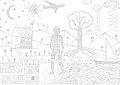 Large calligram at the Valencian Museum of Ethnology
 -
 "Biblical Cosmography", large calligram of the Bible in Latin by Gianluca Bosi
 -
 A calligrapher at work on the school wall

.svg)

.jpg)


See also
[edit | edit source]References
[edit | edit source]Citations
[edit | edit source]- ^ Lua error in Module:Citation/CS1/Configuration at line 2172: attempt to index field '?' (a nil value).
Sources
[edit | edit source]- Lua error in Module:Citation/CS1/Configuration at line 2172: attempt to index field '?' (a nil value).
- Lua error in Module:Citation/CS1/Configuration at line 2172: attempt to index field '?' (a nil value). (with many Japanese calligrams)
- Lua error in Module:Citation/CS1/Configuration at line 2172: attempt to index field '?' (a nil value).
Lua error in Module:Authority_control at line 153: attempt to index field 'wikibase' (a nil value).
