Relatively small snakes, leptotyphlopids rarely exceed 30 cm (12 in) in length; only Trilepida macrolepis and Leptotyphlops occidentalis grow larger. The cranium and upper jaws are immobile and no teeth are in the upper jaw. The lower jaw consists of a much elongated quadrate bone, a tiny compound bone, and a relatively larger dentary bone.[3] The body is cylindrical with a blunt head and a short tail. The scales are highly polished. The pheromones they produce protect them from attack by termites.[4] Among these snakes is what is believed to be the world's smallest: L. carlae (Hedges, 2008).[5]
The diets of leptotyphlopids consist mostly of termite or ant larvae, pupae, and adults. Most species suck out the contents of insect bodies and discard the exoskeleton.[citation needed]
^ abMcDiarmid RW, Campbell JA, Touré TA (1999). Snake Species of the World: A Taxonomic and Geographic Reference, vol. 1. Washington, District of Columbia: Herpetologists' League. 511 pp. Lua error in Module:Citation/CS1/Configuration at line 2172: attempt to index field '?' (a nil value). (series). Lua error in Module:Citation/CS1/Configuration at line 2172: attempt to index field '?' (a nil value). (volume).
^ abLua error in Module:Citation/CS1/Configuration at line 2172: attempt to index field '?' (a nil value).
^Field Guide to Snakes of Southern Africa - Bill Branch (Struik 1988)
^Hedges SB (2008). "At the lower size limit in snakes: two new species of threadsnakes (Squamata, Leptotyphlopidae, Leptotyphlops) from the Lesser Antilles". Zootaxa1841: 1-30.PDF at Zootaxa. Accessed 28 July 2008.
Wikimedia Commons has media related to [[commons:Lua error in Module:WikidataIB at line 506: attempt to index field 'wikibase' (a nil value).|Lua error in Module:WikidataIB at line 506: attempt to index field 'wikibase' (a nil value).]].
Lua error in Module:Taxonbar at line 165: attempt to index field 'wikibase' (a nil value).Lua error in Module:Authority_control at line 153: attempt to index field 'wikibase' (a nil value).


 Namibiana type species; Western thread snake (N. occidentalis)
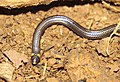 Habrophallos type species; Collared blind snake (H. collaris)
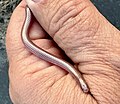 Rena type species; Western blind snake (R. humilis)
 Trilepida type species; Big-scaled blind snake (T. macrolepis)


