
File:M101 UIT.gif


Summary
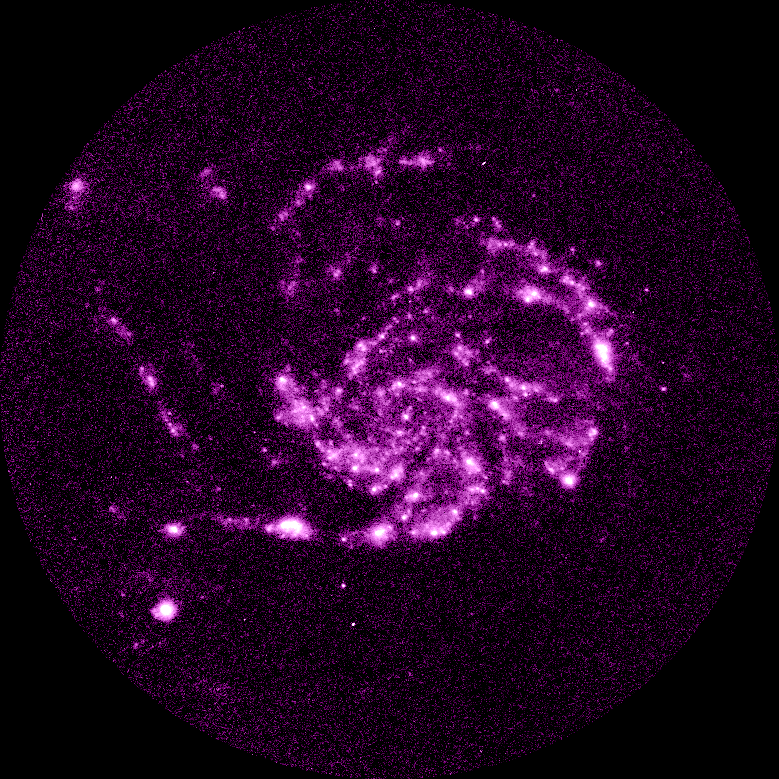
This ultraviolet image of the giant spiral galaxy Messier 101 (M101) was obtained by the Ultraviolet Imaging Telescope during the Astro-2 mission of the Space Shuttle Endeavour.
M101 is an Sc-type galaxy, meaning a spiral galaxy with a relatively small central bulge and a system of spiral arms that is not tightly wound. At a distance of about 16 million light years, it is considered relatively close to the Earth.
M101 is known to contain many giant HII regions, meaning huge glowing nebulae shine as a result of ultraviolet radiation from the massive stars within them. The UIT images will be used to determine the far-ultraviolet energy outputs of these stars and nebulae. Also, the astronomers will study the ages of the nebulae, their dust contents, and the "initial mass functions" of their stars, meaning the relative numbers of stars of different masses when they first formed in the nebulae. This is equivalent to finding the relative numbers of newborn babies of different weights. The investigators will also determine the total mass of all the young massive stars in each HII region or nebula.
Source
Licensing

|
This file is in the public domain in the United States because it was solely created by NASA. NASA copyright policy states that "NASA material is not protected by copyright unless noted". (See Template:PD-USGov, NASA copyright policy page or JPL Image Use Policy.) |  |
 |
Warnings:
|

File history
Click on a date/time to view the file as it appeared at that time.
| Date/Time | Thumbnail | Dimensions | User | Comment | |
|---|---|---|---|---|---|
| current | 20:06, 19 May 2006 | | 779 × 779 (231 KB) | wikimediacommons>Calma | This ultraviolet image of the giant spiral galaxy Messier 101 (M101) was obtained by the Ultraviolet Imaging Telescope during the Astro-2 mission of the Space Shuttle Endeavour. M101 is an Sc-type galaxy, meaning a spiral galaxy with a relatively small c |
File usage
The following page uses this file:
